

PBT – Psychology-Based Tools for Youth Leadership: A Week That Changed Our Perspective
About the Project
Psychology-Based Tools for Youth Leadership (PBT) is a training course funded through Erasmus+ KA153-YOU, with project code 2025-3-RO01-KA153-YOU-000371973. The mobility took place in Pârâul Rece, Romania, from June 22–27, 2026 (6 days of training, plus 2 travel days), and brought together youth workers from partner organizations in several European countries: AsterX (Romania), I Like Dublin (Ireland), HELLAS FOR US (Greece), Prodoss Sport Club (Turkey), and Associazione Eurokom (Italy).
The group also included a participant from Hungary, recruited directly by AsterX, who joined the course alongside the other youth workers.
The aim of the course was to equip youth workers with concrete tools, grounded in psychology and NLP, that they could use directly in their work with young people.
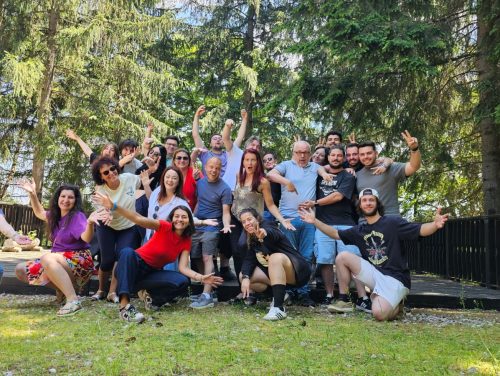
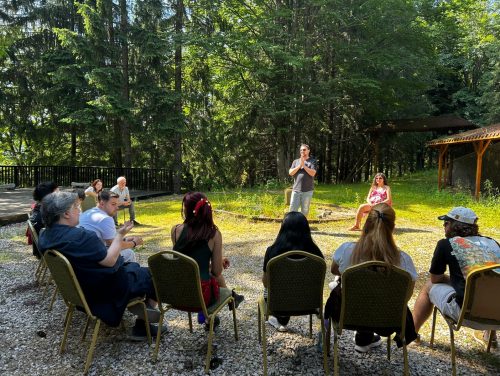
A Week Built Step by Step
The project was very well received by participants — every session sparked long, meaningful discussions about how youth groups function and about how youth workers can concretely apply NLP tools to support them.
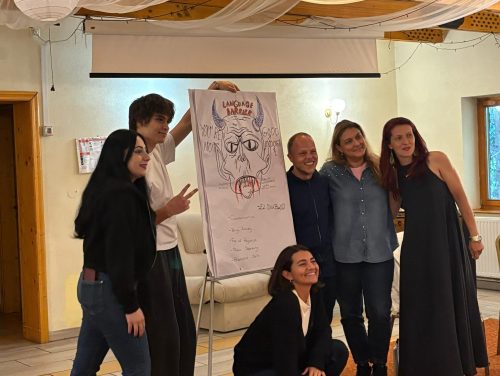
We started with play: participants drew the “monsters” that the young people they work with face, as well as the “superpowers” a youth worker needs to deal with those challenges — including active listening, presence, and empathy. From there, each session built on the last, deepening our understanding of situations we often encounter in youth work: young people feeling lonely, withdrawing, constantly seeking attention, or spending too much time on their phones.
Metaprograms — The Session with the Biggest Impact
One of the sessions with the greatest impact on the group was the one on metaprograms. Participants were split into six teams, each tasked with exploring what one of the six metaprograms means, each structured around two opposite poles:
- General / Specific
- Towards / Away From
- Options / Procedure
- Internal / External
- Proactive / Reactive
- Match / Mismatch
Each team looked for ways to explain their own metaprogram and how the two poles depend on one another. During the presentations, we recognized our own behavioral patterns and laughed as we came up with concrete examples from our own work with young people — a moment that turned a theoretical concept into a personal experience, one that’s easy to remember and apply.
See the full result of the metaprograms exercise → Metaprograms Canva
This self-discovery didn’t stay at the level of personal reflection — it became a starting point for the rest of the week. Once we better understood our own patterns, it became much easier to recognize the same metaprograms in the young people we work with, and to adapt how we talk to them, listen to them, or motivate them, depending on how they “read” the world.
Conclusion
It was a full week, in which intense, meaningful discussions took shape in a non-formal setting. Nature helped us step away from our everyday realities and gave us the space to focus on shaping concrete action plans — tools we can use in critical or less-than-ideal situations involving the young people we work with.
Project funded by the Erasmus+ programme of the European Union, KA153-YOU action. The content reflects the views of the authors only, and the European Commission cannot be held responsible for any use of the information contained herein.